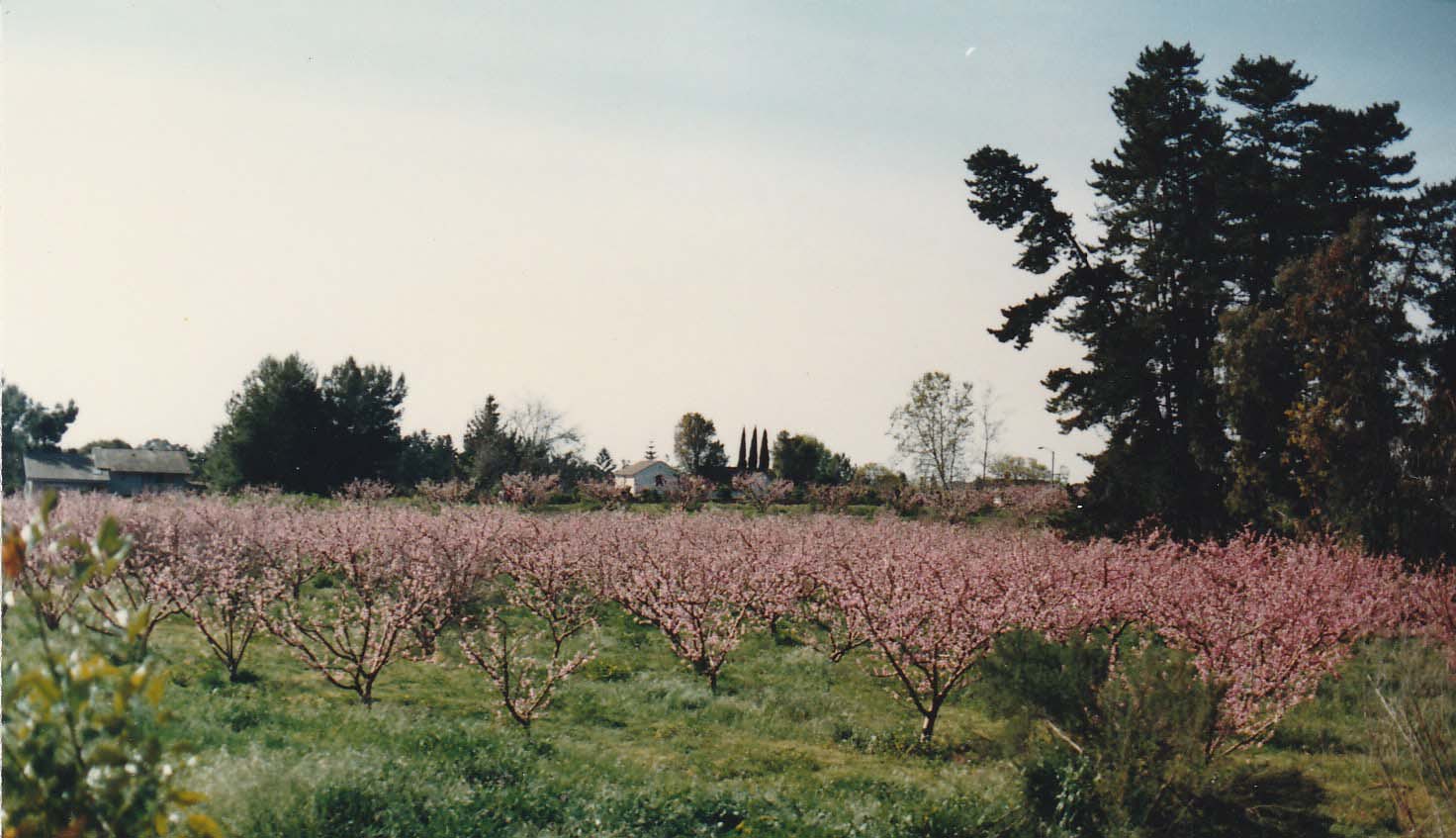
Goleta, CA  ·  Case No. 25-0001-CUP

Protect
the Farm.

This permit follows the land, not the owner.

The Planning Commission decides Monday, July 13. Every comment sent before the hearing enters the public record. The earlier you send, the sooner it reaches the Commissioners. Can’t write? Just come. A full room of quiet neighbors says more than any of us could alone.

Where Things Stand

City staff has released its report for the July 13 hearing, recommending approval. Read it against the original application and one thing is clear: the proposed conditions now include real limits that were not there before. Weddings and all private or corporate rentals are prohibited. Amplified sound is capped at 60 dBA at every property line. Festivals must end by 9 PM instead of 10. Farm-to-table dinners drop from five per month to two, and large events fall from 91 per year in the application to no more than 37 under the proposed conditions.

That is real progress. But the conditions are still weak exactly where the neighborhood lives:

  • Noise limits are self-monitored by the operator, with reports required for only the first two years.
  • The parking plan for a 1,500-guest festival requires 519 spaces; the signed agreements in the conditions cover 197 off-site spaces.
  • There is still no landscape plan, no lighting plan, and no environmental review. The City proposes a categorical exemption instead.
  • Staff’s report asks the Commission directly whether there should be “a reduction in the number and size of events” and whether “the hours” should be “scaled back for the outdoor events.”

That last question is the whole ballgame, and it gets answered Monday, July 13.

A Decision That Lasts Forever

The City of Goleta is reviewing a Conditional Use Permit for Fairview Gardens, a permanent land use entitlement that binds every future owner to whatever uses are approved today. On July 13, 2026, the Planning Commission will decide what this land is permitted to be for generations to come, regardless of who owns it.

The application covers two distinct categories of use. The first includes the farm operations, educational programs, and community activities that Fairview Gardens has long been known for, and that this community broadly supports. The second is an event operation that the proposed conditions now cap, but at a scale and frequency well beyond day-to-day farming: up to 37 large events a year, up to 1,500 guests at a time, amplified music until 9 PM, in the middle of a residential neighborhood.

The figures below are taken from the City’s July 13, 2026 staff report and the proposed Conditions of Approval (Exhibit E of the draft Resolution), not from the original application.

Farm Operations & Programs/Workshops
Use Frequency Max Attendees Hours
Farm OperationsYear-round, Mon–Sat24–34 staffVaries
Farmstand (new, 2,500 sq ft)DailyRollingNot set in conditions (application proposed 9AM–9PM daily)
Café in the FarmhouseDailyRollingNot set in conditions (application proposed daytime, to 5PM)
On-Site Employee HousingPermanent9 unitsN/A
Children's Programs (field trips, camps, after-school)3–5x/week, year-round1009AM-5:30PM
Adult Workshops (culinary, farming, gardening)Up to 20x/month1009AM-9PM
Total program sessions Up to ~500/year
Events & Festivals
Use Frequency Max Attendees Hours
Farm-to-Table Meals24/year (2 per month)Up to 750Weekdays to 9PM; weekends to 7PM
Events (fundraisers, seasonal events, open houses, lectures)Up to 8/year250–750Weekdays to 9PM; weekends to 7PM
Festivals5/year800–1,500 rollingWeekends, to 9PM
Total large events (amplified sound permitted at all of the above) Up to 37/year

The proposed conditions now require every event to be open to the public, and they prohibit weddings and all private or corporate rentals. Those are real limits, and they matter. But the conditions still never define what a farm-to-table meal is, and they entitle 24 of them a year, at up to 750 guests each, to every future owner of this land, forever. Compliance rests on the operator monitoring its own sound levels, with reports required for only the first two years. With every event type clearly defined and the sound limits independently checked, this becomes the farm permit the community wants. Those additions are what we’re asking for.

Our Position

We want this permit to describe a farm, and the details are what will make it one. What follows is where we stand, and the uses we support.

What We Support

We believe Fairview Gardens can be something extraordinary. A working farm, open to the community, rooted in education and agriculture.

We support the following uses at Fairview Gardens:

  • Organic farming and on-site produce sales
  • Farm-based education for all ages
  • Farm tours open to the community
  • On-site farm employee housing
  • Restoration of the historic farmhouse

Our Concerns

Our concerns are specific, and every one of them comes straight from the City’s staff report and proposed conditions for the July 13 hearing.

Event Types That Aren’t Defined Yet

The conditions cap the events, but they never define them. In a permit that runs with the land forever, an undefined term is an open door.

  • “Farm-to-table meal” is never defined anywhere in the 84 conditions of approval, yet 24 of them a year, at up to 750 guests each, are entitled permanently
  • Adult “workshops” up to 20 times a month, until 9 PM, at up to 100 people, are separate from and in addition to the 37 large events
  • If an off-site parking agreement lapses, Condition 44 says attendance “must be reduced” but sets no numbers, no process, and no public hearing
  • The permit binds every future owner (Condition 5). Whatever ambiguity is approved now is what a future operator inherits

In a permit that lasts forever, clear definitions protect the farm and the neighbors alike.

Sound Limits That Are Hard to Enforce

The conditions set a 60 dBA limit at the property lines, but the operator measures its own compliance.

  • Amplified sound up to 85 dBA at 10 feet is permitted, with hay bales and temporary walls as the required mitigation (Condition 56)
  • The 60 dBA limit is measured and reported by the operator itself, quarterly, and only for the first two years
  • An acoustical engineer must be present at a total of three events, ever
  • The City’s Notice of Exemption told the public that noise “will not exceed 45 dB” at property boundaries. The conditions allow 60 dBA. The City’s own documents disagree with each other by 15 decibels

A limit the operator measures for itself, for only the first two years, is hard to rely on. Independent monitoring would give it real weight.

A Few Pieces Still to Come

Staff recommends approval while its report notes several items still to be completed.

  • No environmental review: the City proposes a categorical exemption meant for small infill lots, applied to a 12.23-acre farm by counting only the 3.41-acre construction footprint
  • No landscape plan and no lighting plan. Staff concedes there is no information at all about lighting for events that run past sunset
  • The project changed after Design Review (a shorter barn, relocated housing), but those changes exist only in an applicant slide deck. Staff itself asks whether a formal revised project description should be required
  • Story poles for the tallest new building were taken down days after they went up, so neighbors never saw the full outline of what is proposed

Staff’s report itself asks whether the required findings can be made yet. Finishing these pieces first would make for a stronger, more durable decision.

Our Asks

The staff report puts five questions to the Planning Commission, including whether the number, size, and hours of events should be reduced. We offer these asks as constructive answers.

Ask 01

Define What the Farm Is

  • Define every event type in the conditions, including “farm-to-table meal,” with attendance, hours, and frequency written into the definition
  • Cap farm-to-table meals at 12 per year and 250 guests (the low end of the conditions’ own 250–750 attendance range) instead of 24 a year at up to 750
  • Make the numbers limits, not projections: the conditions describe attendance as “estimated,” yet every figure should be written as an enforceable maximum
  • Preserve staff’s new prohibition on weddings and private or corporate rentals, an important protection worth keeping
Ask 02

Protect the Neighborhood

  • Prohibit amplified sound. A working farm does not need concert equipment
  • If the Commission allows it anyway: keep the City’s approach of monitoring a subset of amplified events rather than all of them, but make that monitoring independent and extend the reporting to at least five years, not just the first two
  • A clearly documented complaint process with a designated point of contact at the farm, so neighbors have a reliable way to raise concerns and get a timely response
  • 14-day advance notice to neighbors for any event over 250 people or with amplified sound
  • A minimum of 25 days between large events, festivals included. We do not ask to cut the five annual festivals. We ask only that a festival weekend not be followed by another large event the next
  • An annual event log filed with the City and available to the public (date, event type, attendance, and how tickets were offered), so compliance can be verified from the operator’s own records
  • A clear mechanism when a parking agreement lapses: give Condition 44’s “must be reduced” real numbers: specified attendance reductions, verified by the City
Ask 03

Decide With the Full Picture

  • A few pieces are still being finalized, including the landscape plan, the lighting plan, and an updated project description that reflects the current design. We support giving them time to be completed and shared, an option staff’s report offers, so the decision rests on a full record
  • Where staff’s Question 4 invites it, we support fewer large events and earlier end times
  • As the farm grows, let any future expansion come back for a public hearing with community notice, so neighbors can be part of the conversation

Tell the Planning Commission

The Planning Commission makes its final decision on July 13, 2026. Comments are distributed to the Commissioners in batches before the hearing; even comments sent over the weekend enter the official record and are provided to the Commission. Use the tool below to compose your comment. You will have a chance to review and edit everything before it sends. It goes from your own email address, in your own name, directly to the City.

Step 1 of 3

What is your overall position?

Continue
Back
Step 2 of 3

Which issues concern you? Select all that apply.

Private and commercial events Amplified sound Undefined farm-to-table meals Traffic and parking Agricultural land use precedent Probationary period and enforcement
Continue
Back
Step 3 of 3

Your details

Optional, but adding your address shows the Commission you are a local resident. Comments from nearby neighbors carry particular weight on traffic and noise.

This opens your email client with your comment pre-populated. Your comment is sent from your own email address and entered into the official public record.

Show Up. It Matters.

Written comments enter the record. A room full of engaged residents sends a signal that no email can. You don’t need to speak, and you don’t need to stay for the whole meeting. The Commissioners see who is in the room.

Planning Commission: The Decision

Monday, July 13, 2026
Enter from Los Carneros Road. The main address will not take you to the correct entrance.

Time and Zoom details to be announced. Check cityofgoleta.org for updates.

This is the hearing where the permit will be approved, conditioned, or denied. Your presence here is the most impactful action you can take.

Written comments submitted before the hearing will be distributed to the Planning Commission. Submit yours above.

Parking and Entrance: Use Los Carneros Road
Open in Google Maps

Documents

Read the record for yourself. These are the primary source documents behind everything on this site. Hosted copies are taken directly from the City’s official July 13 agenda packet; the Conditions of Approval and Notice of Exemption are unaltered page extracts from the City’s 37 MB combined exhibits file, provided separately here so you don’t have to download the whole packet. Every document can be verified against the agenda linked below.

July 2026
Proposed Conditions of Approval (Exhibit E)
The 84 conditions the Planning Commission will vote on: the event limits, the wedding and rental prohibition, and the noise rules cited throughout this site.
Download
July 2026
Staff Report & Draft Resolution
City staff’s analysis and recommendation for the July 13 hearing, including the five questions staff puts directly to the Planning Commission.
Download
July 2026
Staff Presentation
Staff’s slide deck for the hearing, and the quickest way to see the project, the proposed conditions, and the open questions.
Download
July 2026
CEQA Notice of Exemption
The City’s proposal that this project receive no environmental review, using a categorical exemption based on the 3.41-acre construction footprint.
Download
December 2024
CUP Project Description
The applicant's own description of the proposed operations, events, and physical development at Fairview Gardens.
Download
July 2026
Applicant’s Presentation
The applicant’s own slide deck for the July 13 hearing, hosted on the City’s agenda system.
View on City site
July 13, 2026
Planning Commission Agenda
The official agenda for the hearing, with links to the complete packet and every remaining document in the record.
View on City site